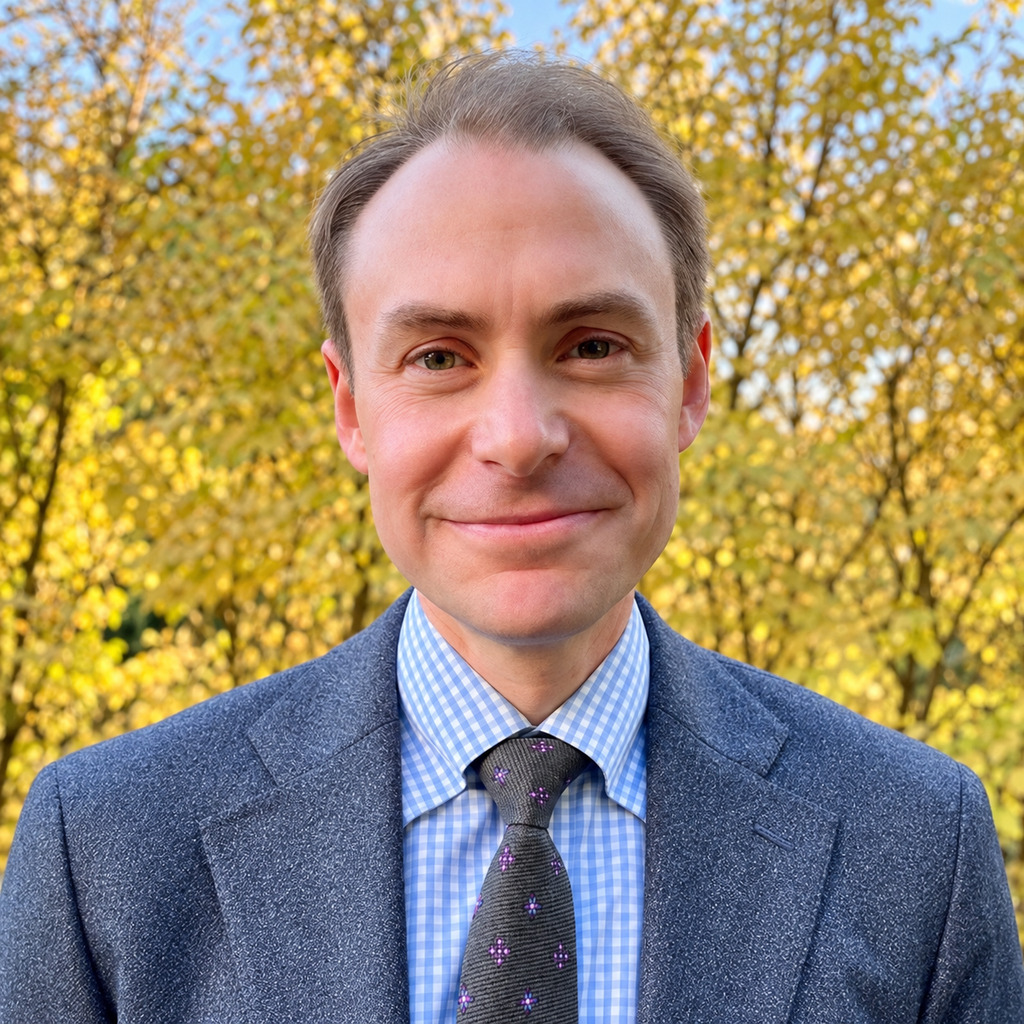
Sean Fahle

I am an applied microeconomist and postdoctoral researcher in the Institute of Economics at the University of Hohenheim. My research uses household microdata and quantitative lifecycle models to study saving, caregiving, bequests, inter vivos transfers, and informal insurance within families.

Sean Fahle

Selected research

Journal of Public Economics · 2025

What do bequests in married couples with a surviving spouse tell us about bequest motives?

Read the paper
Abstract

This paper studies the bequests that arise in married couples after the death of the first spouse. It provides the first systematic examination of these bequests using representative data from the United States on the actual (not intended or expected) bequests made to each of the couple’s children. I find that these bequests are divided among children very similarly to the bequests left by single individuals, which have been the near-exclusive focus of the literature. In both cases, I observe strong support for theories of bequests based on exchange and evolutionary psychology and no evidence for altruistic or dynastic models. Also novel to this paper, I document that different types of assets—residences, estates, and life insurance—exhibit different bequest patterns. While estates are typically equally divided, parents often divide life insurance and especially housing assets unequally, often leaving these assets to caregiving children. Selective disinheritance of certain children, particularly stepchildren, is common.

Revise and Resubmit · The Economic Journal

Family Transfers and Consumption Insurance: A Lifecycle Model

Read the paper
Abstract

A lifecycle model with altruistic parents, formulated as a dynamic game under no commitment, captures key quantitative features of inter-vivos financial transfers from parents to their adult children. We develop a tractable model that handles transfers to both constrained and unconstrained children and calibrate it to U.S. data. The model closely matches the age profile and cross-sectional distribution of inter-vivos transfers as well as their correlations with parent and child income. A newborn household values these transfers at 2.35% in consumption-equivalent terms while they only increase lifetime wealth by 1.31%. Despite a low replacement rate of lost child income—only 3 cents per dollar—altruistic transfers provide meaningful insurance, closing 65% of the consumption-insurance gap left unexplained by standard incomplete-markets models.

Review of Economic Studies · 2023

Save, Spend, or Give? A Model of Housing, Family Insurance, and Savings in Old Age

Read the paper
Abstract

How do housing and family shape the savings, spending, and inter-generational transfer behaviour of the elderly? Using the Health and Retirement Study, we document that inter-generational transfers to children are substantially backloaded, that homeowners dis-save much more slowly than renters but often sell their houses when entering a nursing home, and that care by children slows down nursing home entry and is linked to larger bequests, particularly of housing. To rationalise these facts, we develop a dynamic, non-cooperative model of the family with an indivisible housing asset and joint bargaining between elderly parents and their children over the housing and care arrangements of the parents. The model generates realistic savings and care choices and matches the timing of transfers and home liquidations. A key novelty is the housing-as-commitment channel: In the absence of long-run family contracts, housing provides a commitment device for more efficient savings. We find that this channel increases homeownership in old age by one-third and families’ willingness to pay for houses by 5–10%. This mechanism also facilitates informal care, slows down spending, and leads to larger bequests, implications that we support empirically.

Additional journal articles

Book chapters

2022

How Caregiving for Parents Reduces Women's Employment: Patterns Across Sociodemographic Groups

In Overtime: America’s Aging Workforce and the Future of Working Longer · with Kathleen McGarry

2018

Women Working Longer: The Labor Market Implications of Providing Family Care

In Women Working Longer: Increased Employment at Older Ages · with Kathleen McGarry

2013

International Relative Price Levels: An Empirical Analysis

In Measuring the Real Size of the World Economy · with Charles Thomas et al.

Teaching

Graduate

  • Health Economics
  • Microeconomic Theory
  • Topics in Competition Theory and Policy
  • Mathematical Methods for Business and Economics

Undergraduate

  • Microeconomic Theory
  • Environmental Economics
  • Introduction to Environmental Economics
  • Economics of Education

I have taught Ph.D., master’s, and undergraduate courses at the University of Hohenheim, the University of Tübingen, and the University at Buffalo, ranging from small seminars to classes of more than one hundred students.

Contact